How to Choose the Best Home Water Softener for Your Needs?
Choosing the right home water softener can be a daunting task. Many homeowners face issues with hard water, such as scale buildup and appliance damage. Understanding the features of various systems is crucial. Not all homes require the same solution.
First, consider the size and capacity that suits your household needs. A home water softener should match your water usage patterns. Think about the number of family members and daily consumption. It's important to select a system that won’t be over or under-capacity. This impacts effectiveness and efficiency.
Additionally, pay attention to maintenance requirements. Some systems require more frequent salt refills and checks. Reflect on your lifestyle and how much time you can dedicate to upkeep. An ideal system should simplify life, not complicate it. Weighing these factors will guide you to an informed decision. The right home water softener can transform your water quality.
Understanding Water Hardness and Its Effects on Home Appliances
Understanding water hardness is essential for homeowners. Hard water contains high levels of minerals like calcium and magnesium. Studies show that about 85% of American households deal with water hardness issues. This can affect various home appliances, from dishwashers to water heaters. Over time, hard water causes limescale build-up, reducing efficiency and lifespan.
The impact of hard water is significant. According to the Water Quality Association, hard water can decrease appliance efficiency by 30% or more. This leads to higher energy bills and costly repairs. In addition, hard water affects laundry; it can leave clothes feeling rough and colors dull. Homeowners may find themselves washing clothes more frequently to achieve desired results.
Curiously, many households underestimate this issue. They often overlook the signs of hard water damage until it's too late. Regular maintenance can prevent these problems. Simple tests can measure water hardness levels. Understanding these levels can help in choosing the right water softener. It's a proactive step towards preserving the integrity of home appliances and enhancing overall water quality.
Benefits of Installing a Water Softener in Your Home
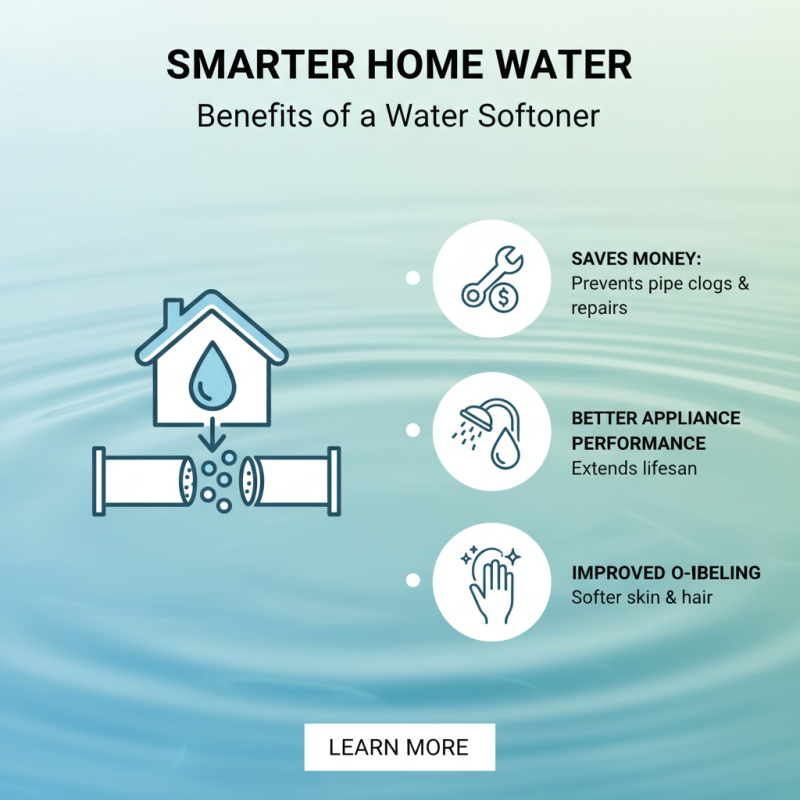
Installing a water softener can significantly enhance your home life. Hard water contains high levels of minerals, which can lead to issues. For instance, limescale buildup can clog pipes and reduce water flow. This damage can be costly over time. By softening your water, you can prevent such problems and save on repairs.
In addition to protecting your plumbing, soft water also benefits your skin and hair. Many people notice improved skin texture and less irritation after switching to a water softener. Hair feels softer and more manageable. These changes may seem minor, but they can have a big impact on daily routines. Moreover, soft water increases the efficiency of soap and laundry detergents. You may find you need less detergent to achieve a clean wash, providing both cost savings and environmental benefits.
Despite these advantages, it's essential to carefully consider your specific needs. Not all water softeners are created equal. Some systems may better suit your water usage patterns. It's wise to research and consult with professionals before making a decision. A water softener is an investment in your home and health. Your choice can lead to significant long-term benefits. The process requires thought and planning.
Types of Water Softeners: Which One Is Right for You?
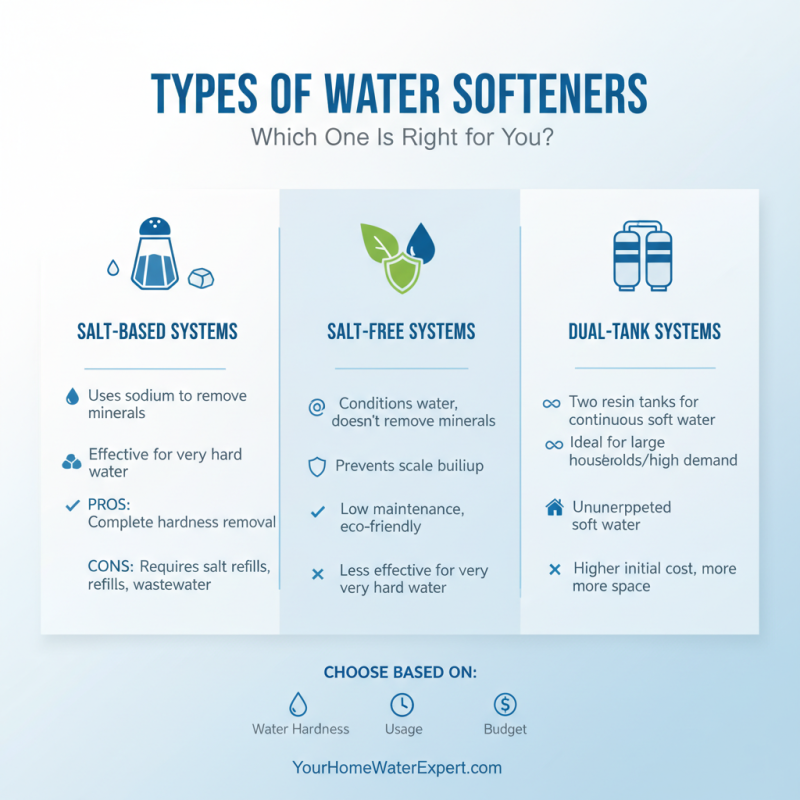
When selecting a water softener, it's crucial to understand the different types available. The most common types include salt-based systems, salt-free systems, and dual-tank systems. Each type serves different needs, depending on the water hardness levels in your area.
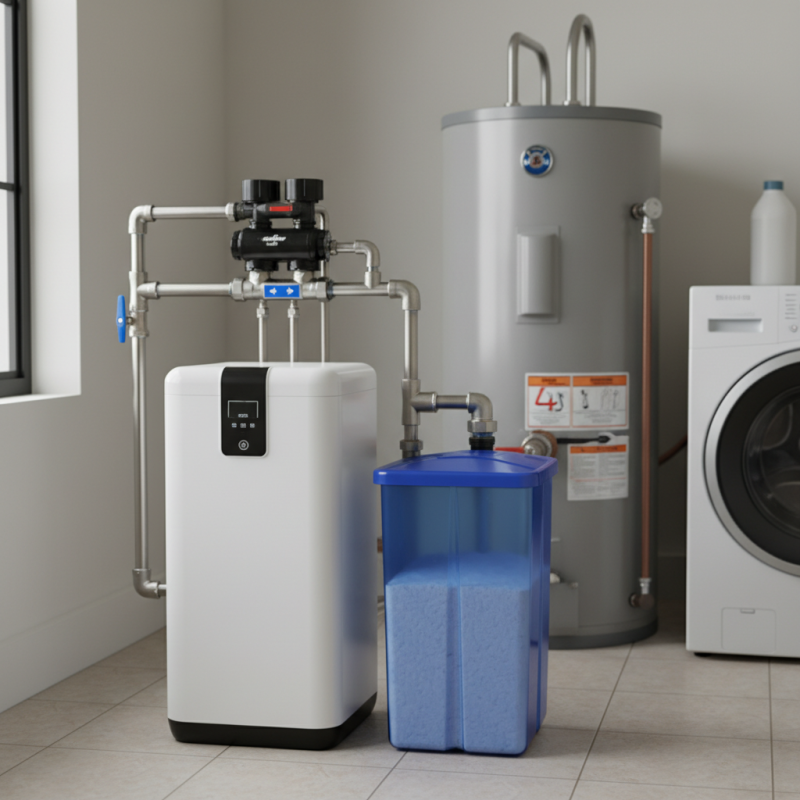
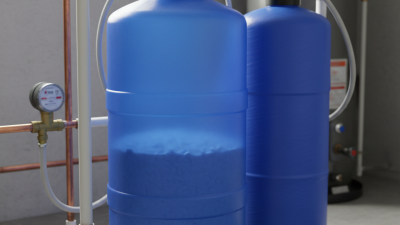
Salt-based water softeners use sodium ions to replace calcium and magnesium ions in hard water. This process effectively reduces scale build-up in pipes and appliances. However, users must consider the need for regular salt refills. This can be a hassle for some households.
Salt-free systems, on the other hand, use a different method to condition water. They do not remove minerals but rather change their structure, preventing them from causing scale. These systems require less maintenance, but they may not be as effective in very hard water areas. Dual-tank systems provide continuous soft water availability, making them a great choice for large families or households with high water demands. Yet, these systems can be more expensive and complex to install.
Ultimately, understanding your household's needs and budget is key. Evaluating your water usage patterns may reveal surprising details that influence your decision. This awareness can help you choose the most effective solution for your water quality issues.
Key Features to Consider When Choosing a Water Softener
Choosing the right water softener involves understanding key features that cater to your specific needs. One of the essential aspects is the capacity of the unit. Water softeners are rated in grains, indicating how much hardness they can remove before regeneration. On average, families require about 30,000 to 40,000 grains of capacity for optimal performance. Underestimating this can lead to frequent regenerations, increasing salt and water usage.
Another critical feature is the type of regeneration process. There are two main types: time-initiated and demand-initiated systems. Demand-initiated systems use sensors to detect water usage, optimizing salt usage. Reports indicate that they can reduce salt consumption by up to 30%. This efficiency can save money in the long run and contribute to sustainability.
Tips: Consider your water hardness level before purchasing. Test your water to determine its hardness in grains per gallon (gpg). If hard water is above 10 gpg, a higher capacity unit is advisable. Regular maintenance is crucial too. Clean the brine tank periodically to ensure efficiency.
Lastly, look for features like water-saving modes and programmable settings. These can enhance convenience and utility. It's important to reflect on your family's usage habits and local water supply characteristics. This careful approach will aid in selecting a water softener tailored to your needs.
How to Choose the Best Home Water Softener for Your Needs?
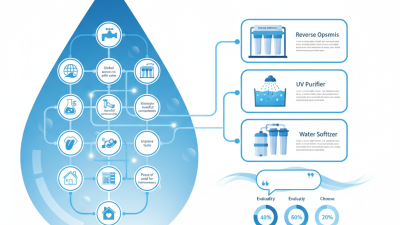
This chart illustrates important features to consider when choosing a water softener for your needs. It compares the hardness level capability, flow rate, tank size, warranty period, and price. This will help you make an informed decision based on these critical parameters.
How to Calculate Your Household Water Softening Needs
Calculating your household water softening needs is crucial for selecting the right system. Start by determining your water hardness level, measured in grains per gallon (gpg). You can find this information in your municipal water report or through a home testing kit. A higher hardness level means you need a more powerful softener. Many people underestimate their actual water needs based on their lifestyle and household size.
Next, assess your daily water usage. On average, a family of four uses about 75 gallons per day. Multiply this by the number of people in your household. Then, use your hardness level to calculate the size of the softener required. A simple formula is: (Daily water usage) x (Hardness level) = Required grains of softening per day. This calculation helps you choose a softener with the right capacity, ensuring effective treatment.
Keep in mind that your household's unique habits will influence your water softening needs. Factors like the number of bathrooms, frequency of laundry, and water-using appliances all contribute to your total usage. Sometimes, the ideal solution may not be the biggest or most advanced softener. It might be the one that fits best with your specific needs and lifestyle. Balancing performance with your water consumption is key to making the right decision.
How to Choose the Best Home Water Softener for Your Needs?
| Parameter |
Value |
Notes |
| Household Size |
4 members |
Average household size in the US |
| Water Hardness Level |
10 gpg |
Grains per gallon |
| Daily Water Usage |
70 gallons |
Estimated for a family of four |
| Softener Capacity |
32,000 grains |
Suitable for moderate hardness levels |
| Regeneration Type |
On-demand |
Saves salt and water |
| Salt Type |
Solar Salt |
Effective and less expensive |
| Maintenance Frequency |
Twice a year |
Regular check-ups recommended |