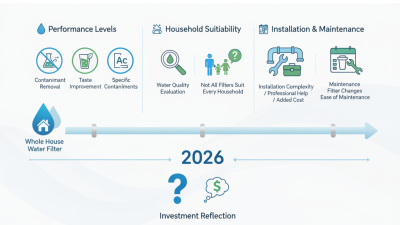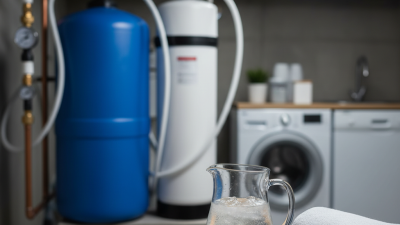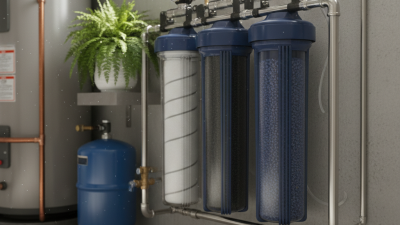
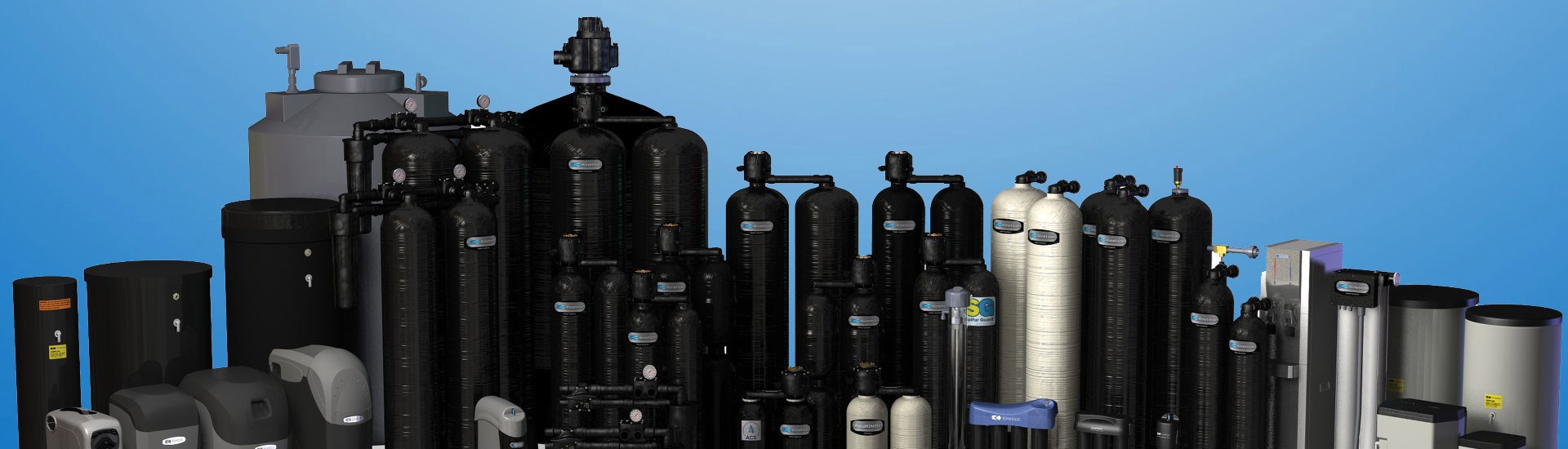
Choosing a whole house water filter and softener begins with a question many homeowners skip: what is actually in the water? A cloudy glass, white scale around a faucet, or chlorine smell can offer clues, but none confirms the cause. A certified laboratory test or reliable local water report gives a stronger starting point. Dr. Andrew Whelton, a Purdue environmental engineer who studies drinking-water systems, offers a useful principle, paraphrased here rather than presented as a direct quote: test the water before choosing treatment. That distinction matters. A softener targets hardness minerals; a filter may reduce specific contaminants, depending on its design and certification.
This guide explains how to compare a whole house water filter and softener without buying equipment based on broad promises. Check the test results, household flow rate, peak simultaneous use, cartridge replacement costs, and the system’s certifications. Picture a shower running while the washing machine fills: an undersized unit may struggle at that moment, even if its brochure sounds impressive. Installation space and drain access matter too. So does maintenance. Filters need timely replacement, and softeners require appropriate salt or another regeneration method. Details add up.
There is no universal setup. A well-water home may face different issues from a municipal-water home, and even nearby properties can differ. Treat this as a careful decision, not a shopping shortcut. Some uncertainty remains until the water is tested. That is worth acknowledging.
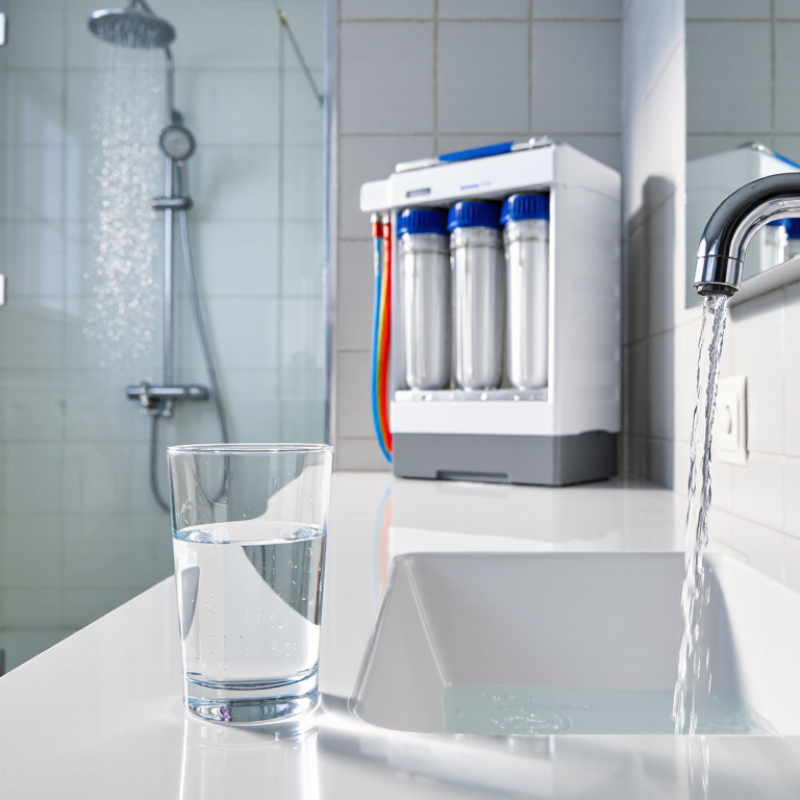
A whole-house filter and a water softener solve different problems. A filter may reduce sediment, chlorine taste, or other substances, depending on its treatment media. A sediment cartridge can catch grit that clouds water or collects in a faucet screen. Activated carbon can improve chlorine taste and odor. Some specialized media target iron or other specific contaminants, but no single filter removes everything. Check test results and product certifications against the contaminants you actually need to address. Different jobs.
A softener mainly reduces hardness caused by calcium and magnesium. This can limit scale on kettle elements, shower doors, and plumbing fixtures, while helping soap lather. It does not disinfect water or automatically remove chemicals, lead, or sediment. Not everything. Softening can also add sodium, so people on sodium-restricted diets may want to discuss options with a health professional. Test your water before choosing equipment; municipal reports or a certified laboratory can help identify what is present. Well water may need testing for additional concerns. Even a careful test is only a snapshot, so retesting after changes in taste, staining, or local water conditions is sensible.
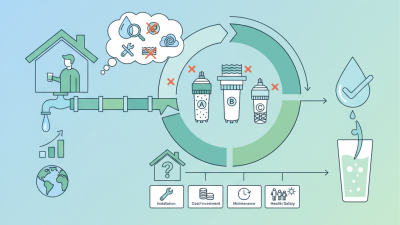
Before choosing a whole-house filter or softener, test the water entering your home. A clear glass can still contain dissolved contaminants, while scale on a kettle suggests—but does not confirm—hardness. Ask a certified laboratory for a report covering hardness, pH, total dissolved solids, and locally relevant contaminants. For private wells, the CDC recommends testing at least annually for substances such as bacteria and nitrates. Hardness is different. It is mainly a measure of calcium and magnesium, not proof that water is unsafe.
The results can change your equipment choice. A softener targets hardness; it does not automatically remove lead, nitrate, or PFAS. The USGS estimated that at least one PFAS may be present in nearly 45% of U.S. tap-water samples, based on a nationwide study and modeling—not a test of every home’s tap. Numbers matter. Compare your lab results with treatment claims, and check whether the device has independent certification for the specific contaminant you want reduced. Retest after installation. It may feel like one more household chore, but guessing can mean buying the wrong treatment—or overlooking a contaminant your test could have revealed.
Test your water before choosing equipment. These U.S. Geological Survey hardness categories are expressed as milligrams per liter (mg/L) of calcium carbonate; each bar marks the threshold at which a category begins. A softener treats hardness, while a filter should be selected to address contaminants identified by testing. Local water conditions and treatment needs vary.
A whole-house filter and a water softener solve different problems. Sediment cartridges catch visible grit that can clog fixtures, while activated carbon can reduce chlorine taste and odor. Neither automatically removes every dissolved contaminant. That matters. Start with a recent water test, not a guess based on cloudy water or a kettle’s white scale.
For hard water, an ion-exchange softener replaces calcium and magnesium with sodium or potassium ions. It can reduce scale on shower doors and heating elements, but it is not a general-purpose purifier. Check the hardness level and household demand before sizing one. If iron is present, ask whether the proposed system can handle its form and concentration; some setups need pretreatment. Small details matter.
Other technologies target specific concerns. Reverse osmosis can reduce many dissolved substances, but whole-house installation may create substantial wastewater and maintenance demands. Ultraviolet treatment can inactivate certain microorganisms when water is properly prefiltered, but it does not remove chemicals or particles. Compare the tested reduction claims, replacement schedules, flow rate, and operating costs. I would not copy a neighbor’s setup; their source water may be different. Even a good test has limits, so confirm unusual results with a qualified water professional.
A whole-house system should match your plumbing, not just the number of bathrooms. Start with a recent water test that checks hardness, sediment, iron, and other locally relevant concerns. A clear glass can reveal grit, but it cannot identify dissolved minerals. Test first.
Then estimate peak flow, especially if a shower, washing machine, and kitchen tap may run together. Check your home’s pipe size and the filter’s rated flow; an undersized unit can reduce pressure at busy times. Note the difference between daily water use and short periods of heavy demand. They are not the same.
For a softener, use test results and household consumption to estimate capacity, then allow for regeneration needs. A family of four with hard water may need a different size than two people in a smaller home. Existing plumbing matters, too: leave room for service access, a drain connection, and bypass valves. Tight utility closets can make an otherwise suitable system frustrating to maintain. I have seen sizing guides make this look more exact than it is; actual use varies.
Compare filtration media with the specific issue found in your water, and check replacement intervals and pressure-drop data. Municipal reports and qualified water professionals can help interpret results, particularly when several concerns appear together. Keep a record of test dates and maintenance. Small details are easy to forget.
Before choosing equipment, test the water and note daily household demand. The USGS Water Science School reports that about 85% of U.S. homes have hard water, but that broad figure cannot diagnose your tap. A certified lab test can identify hardness, sediment, iron, and other concerns. Start with evidence.
Ask installers to itemize the work: bypass valves, drain routing, electrical access, and any plumbing changes. Those details affect the upfront quote and future servicing. Compare the softener’s regeneration settings and water use, plus filter cartridge prices and replacement intervals. A low purchase price may hide frequent cartridge changes or costly salt deliveries. Keep a small maintenance log.
Budget for more than the first year. Include salt, replacement media, routine service, and water used during regeneration; estimates vary with household size and water chemistry. CDC guidance recommends annual testing for private wells, including checks for coliform bacteria, nitrates, total dissolved solids, and pH. That schedule does not fit every municipal supply, but it shows why upkeep should be planned. One easy-to-miss detail: leave enough clear floor space to lift a heavy filter housing without scraping the wall. The estimate may still be imperfect. Ask what could change it.